
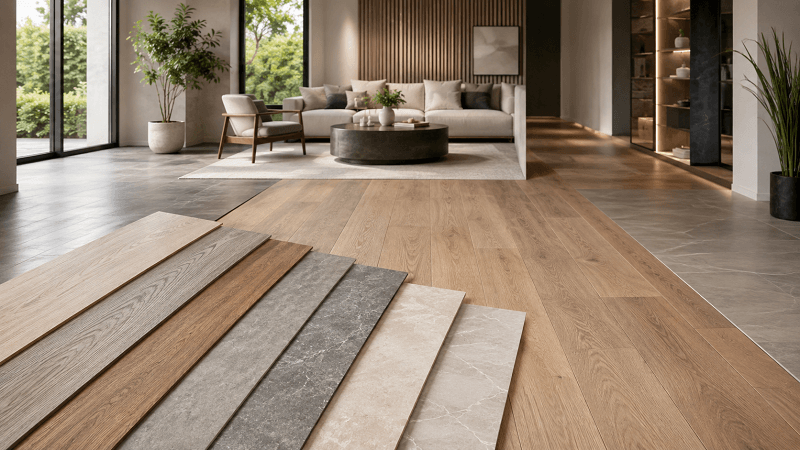
Flooring is one of those renovation decisions that’s easy to underestimate. A paint colour can be changed over a weekend and furniture can be replaced, but changing a floor is expensive, disruptive and usually something you’d rather not do again for a long time.
That makes it worth looking beyond whatever happens to be popular right now. Instead, consider materials, colours and finishes that have already shown they can work across different interior styles. Natural materials can be useful here because their appearance isn’t created around a single trend. Options such as GatherCo Travertine Tiles, for example, bring the natural variation of stone into a space rather than relying on a fashionable printed pattern or finish.
Be Careful With Extreme Colours
There’s nothing wrong with making a statement, but flooring covers a huge amount of visual space. An extreme colour that looks impressive in a showroom can dominate your home once it’s installed from wall to wall.
Very pale, very dark or highly saturated floors can also limit your decorating options later. If you’re hoping for longevity, consider tones that can comfortably sit alongside several colour palettes.
That gives you more freedom to repaint walls, replace furniture and change your decorating style without suddenly finding that the floor clashes with everything else.
Look Beyond Current Trends
Social media can make a particular flooring style seem as though it’s everywhere overnight. That’s useful for inspiration, but popularity alone isn’t a good reason to choose something you’ll potentially live with for decades.
Before committing, ask yourself whether you genuinely like the flooring or whether you’ve simply become accustomed to seeing it.
It can also help to look at interiors from five, ten or even twenty years ago. Materials and finishes that still look appealing can provide clues about what tends to age well.
Consider Texture as Well as Colour
Colour isn’t the only feature that influences how quickly a floor can look dated. Texture and pattern matter too.
Highly distinctive patterns can become closely associated with a particular design era. More subtle variation tends to provide visual interest without overwhelming the room.
When comparing samples, look at:
- The amount of variation between individual pieces
- How noticeable the pattern will be across an entire room
- Whether the texture complements other materials in your home
- How the surface looks in natural and artificial light
Always view larger samples where possible. A small piece doesn’t necessarily show how a material will look across several square metres.
Think About the Rest of Your Home
A floor shouldn’t be chosen in isolation. Consider permanent or expensive features you aren’t planning to replace, such as kitchen cabinetry, benchtops, fireplaces and built-in furniture.
Transitions between rooms matter as well. If you’re using different flooring materials throughout the house, they should feel intentional when viewed next to each other.
Don’t Forget Everyday Practicality
A timeless appearance doesn’t mean much if the flooring doesn’t suit your lifestyle. Think about foot traffic, cleaning, moisture, pets and the maintenance the material requires.
Ask suppliers how the floor should be cared for and whether it requires ongoing treatments such as sealing. Understanding those requirements before installation can prevent unpleasant surprises later.
The safest long-term choice isn’t necessarily the plainest floor you can find. It’s one that suits your home, works with different decorating styles and is practical enough for everyday life. Choose with those factors in mind, and you’ll be far less dependent on whatever happens to be fashionable next year.