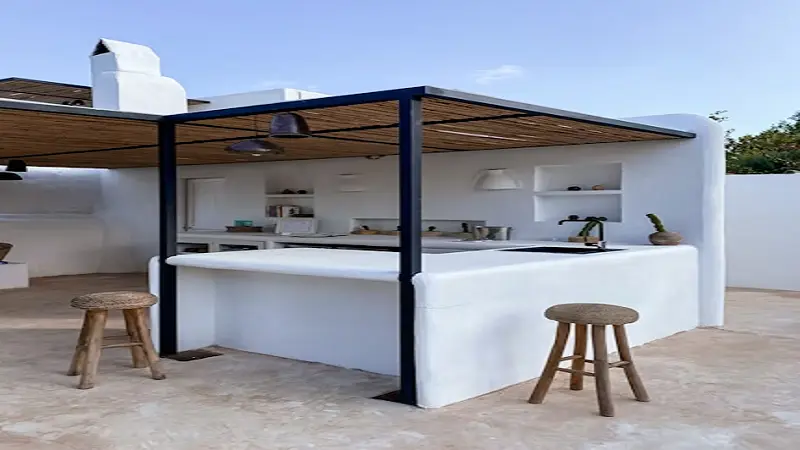
Having an outdoor kitchen might not seem like something you need if you’ve lived without one up until now. After all, it’s not like cooking indoors is lacking in any way. However, there are also some situations in which preparing meals outside is definitely preferable to doing it inside. One of the most important ones is that you don’t have to worry as much about smoke and grime as you would if you were to prepare certain dishes inside. You will be able to entertain your guests with your cooking and barbecue skills, while also increasing the value of your home.
Cooking for a large number of people becomes much simpler, and you also have more space at your disposal to relax. If you enjoy spending time outdoors but love the familiarity of home as well, having an outdoor kitchen is the way to have your cake and eat it, too. However, creating and assembling such a kitchen is not a simple task, and there are several things you need to keep in mind when planning for one, since its requirements and functions are similar to those of a standard kitchen, but there are also a few fundamental differences you must take into account.
The cabinets
The kitchen cabinets are a must for every kitchen. They’re where you store the appliances, utensils, pots, and pans (so that you don’t have to carry them outside and then back inside every single time), making them essential for all food preparation. If your kitchen is covered, you can use regular cabinets such as those from Kitchen Warehouse Ltd, but make sure to take the weather conditions into account. You don’t want them to end up ruined by high humidity. The best way to protect them is with regular maintenance, as sealants and special finishes designed for outdoor conditions will protect the materials and prevent splintering, fraying, or any other kind of damage.
For the outdoor kitchens that will be exposed to the elements, you’ll need to look into very sturdy materials, though, otherwise you’ll find yourself forced to redo your kitchen every year or two. Medium-density overlay, also known as MDO, is one of the best options due to its resistance to various weather conditions, thanks to the resin that is bonded to the wood through pressure and heat. High-density polyethylene, also known as HDPE, can also be used for outdoor cabinets. Flexible pipes, storm drainage systems, disposable suits, monobloc chairs, milk jugs, jerrycans, bottle caps, vehicle fuel tanks, chemical-resistant piping, and containers that have to carry oils of any kind are typically made out of this material.
When it comes to furniture, you can use WPCs, wood-plastic composites that are ideal for the outdoors (in the US, this material is frequently used for decks).
The oven
Over the last few years, range cookers have become increasingly popular among homeowners due to their charming look. Their charming look (the result of the fact that the brands producing the cookers are at least a century old themselves) has made them attractive to buyers in spite of the elevated price tags and the fact that they consume quite a lot of fuel. But what about the outdoors? Having a range in your kitchen outside isn’t impossible, but you should also aim to be creative.
A wood-fired oven can be what you’re looking for. Pizza is the most obvious choice, of course, with those who prefer it this way saying that the food has a unique flavour due to the prolonged cooking times, lower heat, and the use of wood. However, you can also try to make other dishes as well, such as roasted vegetables, baked fish, focaccia, potatoes, all kinds of seafood, corn on the cob, and even desserts.
Natural materials
Using natural materials for your furniture and flooring has become increasingly popular over the last few years, and since bringing them indoors works so well, you can definitely see why having an outdoor kitchen made out of these materials is a good idea. Using them will make your kitchen blend seamlessly with its surroundings, creating a more cohesive design that doesn’t clash with its environment. Wood and stone are the most obvious choices as they will be able to create a rustic atmosphere.
Depending on your preferences, you can choose wooden furniture in lighter or darker tones, but remember that you need to maintain the material to keep it looking fresh. Tung oil offers excellent water resistance and creates a natural-looking, satin finish, preventing cracking and withstanding stains and chemicals. However, that doesn’t mean you won’t have to reapply it periodically. Even the strongest finishes won’t be able to protect wood against the elements forever, so regular maintenance is definitely needed.
As for the stone flooring, you need to focus on something that doesn’t just look good but is also safe. For instance, if it rains a lot where you are, the stones could become very slippery when damp. Flagstone is the most popular option, but, depending on the finish, it can be dangerous in certain weather conditions. Naturally textured finishes, matte sealants, and anti-slip additives can be added to enhance the appearance. Good drainage will prevent puddles, while regular cleaning can help prevent algae and moss from forming a film over the stones.
The sink
Your outdoor kitchen sink should be sturdy and spacious, allowing you to wash large pots and containers with ease. Dishes you used indoors can be washed outside this way as well, so that you don’t cause any mess inside. The ideal outdoor sink is durable and low-maintenance, so go for materials that won’t rust and that are resistant to mildew. This is why it’s essential to shop with quality in mind. This really isn’t an area where you’ll want to save excessively, especially since the installation and plumbing will be costlier than in the case of indoor kitchens as well. It is always a better idea to buy something sturdy and reliable from the beginning, rather than trying to save money and ending up having to replace the sink after a few months.
Planning an outdoor kitchen is different from assembling one inside your home. You have to consider that the materials will be exposed to the elements and end up damaged as a result, so you’ll need special ones and unique installation methods. Choosing the right methods is the best way to have an outdoor kitchen that lasts.